
Three Empty Chairs to Fully Booked: How a New Dental Practice Transformed Its Patient Pipeline in 5 Months

The Snapshot Opening a new dental practice is one of the most significant investments a dentist can ...

Three Empty Chairs to Fully Booked: How a New Dental Practice Transformed Its Patient Pipeline in 5 Months

The Snapshot Opening a new dental practice is one of the most significant investments a dentist can ...
How a New Dental Practice Transformed

Growth Strategy and Optimisation

Maximising growth potential with precision and purpose.

The Snapshot

Opening a new dental practice is one of the most significant investments a dentist can make. The equipment alone runs into hundreds of thousands of pounds. The premises, the fit-out, the staffing, the regulatory compliance — every element demands time, money, and attention before a single patient walks through the door.

And then the doors open. And the phone doesn’t ring.

That is exactly where this practice found itself five months before everything changed.

BEFORE XONIK

The Practice

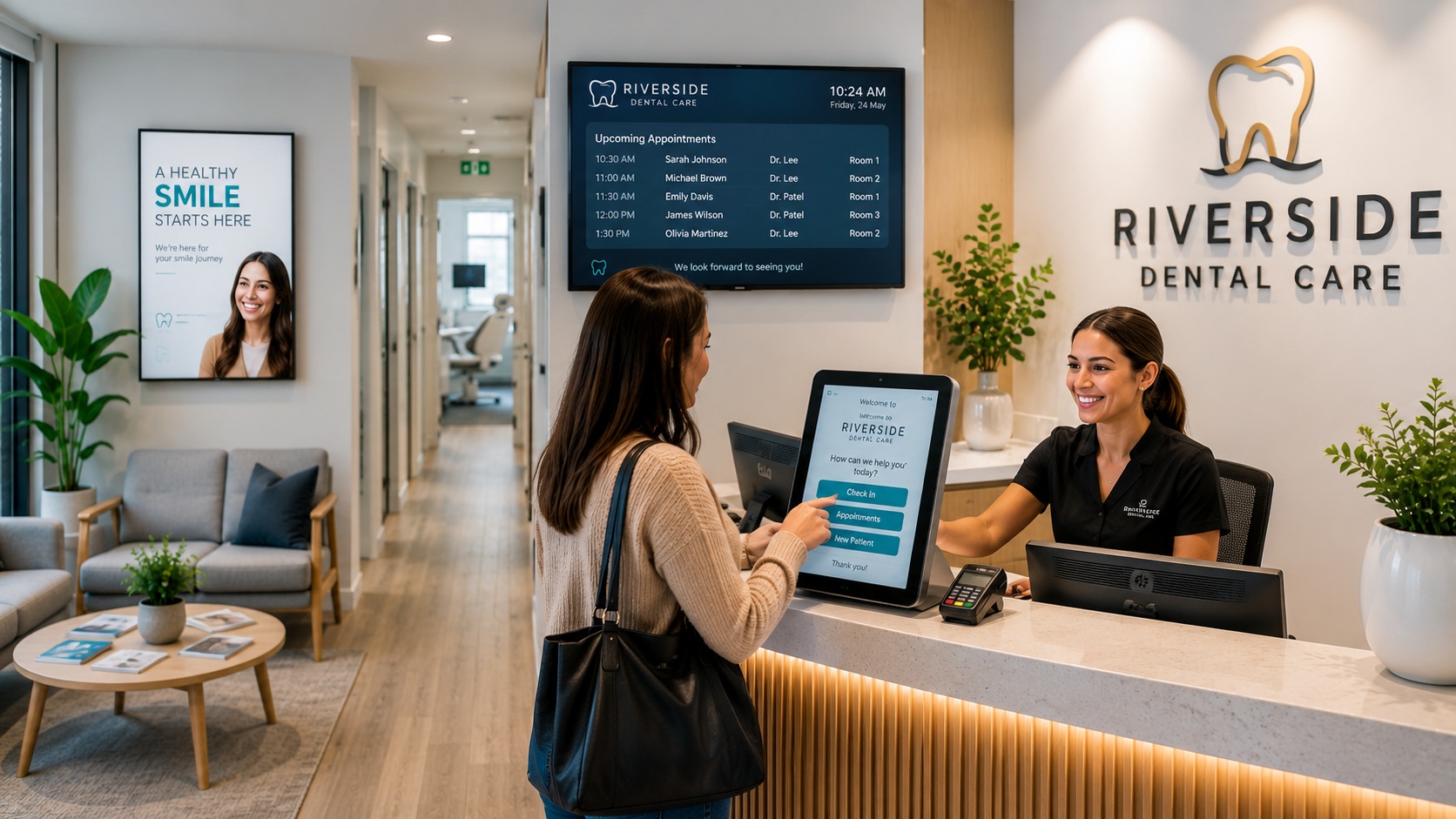
A newly opened independent dental practice in a competitive urban area. Three fully equipped treatment rooms. A qualified and experienced dental team. A modern, well-designed space that patients would love — if only they could find it.

The Digital Reality

A previous attempt at paid search had ended in frustration. Broad, untargeted campaigns had attracted clicks from people with no intention of buying. Budget was being spent. Results weren’t coming. The business owner had nearly written off digital advertising entirely.

The Core Problems

The practice was operating in a market where patients had abundant choice. Three established dental practices within half a mile. A corporate dental chain two streets away. NHS provision nearby drawing price-sensitive patients. In that environment, being new and unknown was a significant disadvantage — and their digital presence was doing nothing to overcome it.
Their previous attempt at Google Ads had been a dispiriting experience. Broad keywords, no geographic precision, no conversion tracking, and ad copy that looked identical to every other dental practice in the area. Money had gone out. Patients had not come in. The practice owner had concluded — understandably but incorrectly — that Google Ads simply didn’t work for dental practices.
Meanwhile, their local search visibility was essentially non-existent. Patients searching “dentist near me” or “dental practice [area]” were finding their competitors. Not them.
Three chairs sat waiting. The diary had gaps that a practice at this stage of its investment simply could not sustain.
Something had to change.

How We Got There

Step 1 — Stop the Bleeding: Google Business Profile

The single fastest-impact action available to any local healthcare business is a fully optimised Google Business Profile — and this practice’s profile was a missed opportunity of significant proportions.

We rebuilt it from the ground up. Accurate and complete business information. High-quality photography of the practice interior, treatment rooms, and team. A precise service list covering every treatment offered. Regular posts signalling activity and engagement. Most importantly, we implemented a structured, compliant review generation programme — making it simple and natural for new patients to share their experience immediately after their appointment.
Within the first month, the practice’s Google Business Profile visibility increased dramatically. They were appearing in the local map pack for the first time. Patients were finding them.

Step 2 — Fix the Foundation: Technical SEO & Local Pages

A website that cannot be properly read by search engines is a website that cannot rank. Our technical audit of the practice’s site revealed a series of issues — slow loading speeds on mobile, missing structured data for healthcare providers, no location-specific content, and service pages that described treatments in clinical language that no patient ever searched for.
We addressed every technical issue. We rewrote service pages in patient-friendly language built around real search queries. We created location-specific landing pages targeting the precise geographic areas from which the practice drew — or wanted to draw — patients.
We also implemented healthcare-specific structured data markup, helping search engines understand and correctly categorise the practice’s services, location, and patient offer.

Step 3 — Rebuild Paid Search: Google Ads Done Properly

The practice’s previous Google Ads experience had been a lesson in what happens when campaigns are built without strategy. We rebuilt the account entirely.
Out went broad, expensive keywords competing nationally for terms like “dentist.” In came precisely targeted, location-specific campaigns built around the high-intent searches that new patients in their area were making — “NHS dentist accepting new patients [area],” “emergency dentist [city],” “dental implants [location],” and “private dentist near me.”
Ad copy was rewritten to speak directly to the concerns and priorities of new patients — reassurance for anxious patients, clarity on NHS and private options, and specific callouts for the treatments where the practice had genuine competitive strengths.
Critically, we implemented conversion tracking properly — connecting ad clicks to phone calls, contact form completions, and appointment booking actions. For the first time, the practice could see exactly which keywords, ads, and campaigns were generating real patients — and we could optimise relentlessly toward the ones that worked.

Step 4 — Build the Review Foundation

In healthcare, reviews are not a nice-to-have. They are the primary trust signal for every patient considering a new practice. A dental practice with 60 genuine 4.8-star reviews will consistently outperform one with 8 reviews at 3.9 — regardless of the quality of clinical care, because patients cannot assess clinical quality before their first appointment. They assess trust signals. Reviews are the most powerful trust signal available.
We designed and implemented a review generation programme that was simple, compliant with healthcare advertising standards, and genuinely effective. Staff were trained on when and how to invite reviews. A follow-up process was introduced for new patients. QR codes linking directly to the Google review page were placed in the reception area and on appointment reminder communications.
Within three months, the practice had accumulated over 60 verified reviews with an average rating of 4.8 — transforming their first impression from an unknown new practice to one of the most trusted in their local area.

Step 5 — Continuous Optimisation

Every campaign, every ranking, every review metric was monitored and optimised on an ongoing basis. Monthly reporting provided the practice owner with complete visibility on performance — new patient enquiries by channel, cost per enquiry from Google Ads, keyword ranking movements, review volume and rating trends.
The strategy was not set and forgotten. It was actively managed, continuously refined, and consistently improving.

FAQs

With the right strategy, a new dental practice can begin generating measurable new patient enquiries within 4 to 8 weeks — primarily through Google Business Profile optimisation and Google Ads. Organic SEO results typically follow within 3 to 6 months as local rankings improve. The fastest results consistently come from combining paid search for immediate visibility with local SEO and review generation for sustainable long-term growth.

Reviews are the single most important trust signal for any healthcare provider marketing to new patients. Before a patient makes their first appointment, they cannot assess clinical quality — they assess the evidence of other patients’ experiences. A dental practice with a high volume of recent, positive reviews will consistently convert more website visitors and Google Business Profile views into booked appointments than one with few or outdated reviews, regardless of the quality of clinical care delivered.

Yes — when campaigns are built with the right strategy. The critical factors are geographic precision, keyword intent, patient-focused ad copy, and proper conversion tracking. Dental practices that have had poor Google Ads experiences have almost always run broad, untargeted campaigns without conversion tracking — making it impossible to optimise toward what actually works. A properly structured dental Google Ads campaign, actively managed and continuously optimised, consistently delivers a measurable and profitable return on investment.

Google Business Profile optimisation is the single highest-impact starting point for any new dental practice. It is free, it directly influences local search rankings, it appears prominently in Google Maps results, and it is frequently the first thing a new patient sees when searching for a dentist in their area. A complete, accurate, actively managed Google Business Profile with strong review volume is the foundation on which everything else is built.

Independent dental practices have advantages that corporate chains cannot easily replicate — local relevance, personal relationships, community connection, and the ability to build a genuine personality and reputation within a specific geographic area. These advantages, properly expressed through local SEO, Google Business Profile, and authentic social proof in the form of patient reviews, allow independent practices to consistently outperform corporate chains in local search — particularly for the high-intent, location-specific searches that drive new patient enquiries.

For a new or growing independent dental practice, a combined monthly budget covering local SEO management, Google Ads spend, and Google Business Profile management typically ranges from £800 to £2,000 per month depending on market competitiveness and growth ambitions. The key measure is not the absolute spend but the cost per new patient acquired — which in a properly managed campaign should be comfortably lower than the lifetime value of a retained dental patient.

Absolutely. While the primary focus of local SEO and Google Ads is new patient acquisition, email marketing, social media, and review management all contribute to patient retention and reactivation. Patients who follow a practice on social media, receive appointment reminders and oral health content by email, and feel part of a trusted community are significantly more likely to remain loyal and refer friends and family — extending the value of every new patient acquired through digital marketing.

Privacy Policy

Terms & conditions

Cookies

Accessibility

Compliance & Ethics

Modern Slavery Act statement

Careers

Community

About