
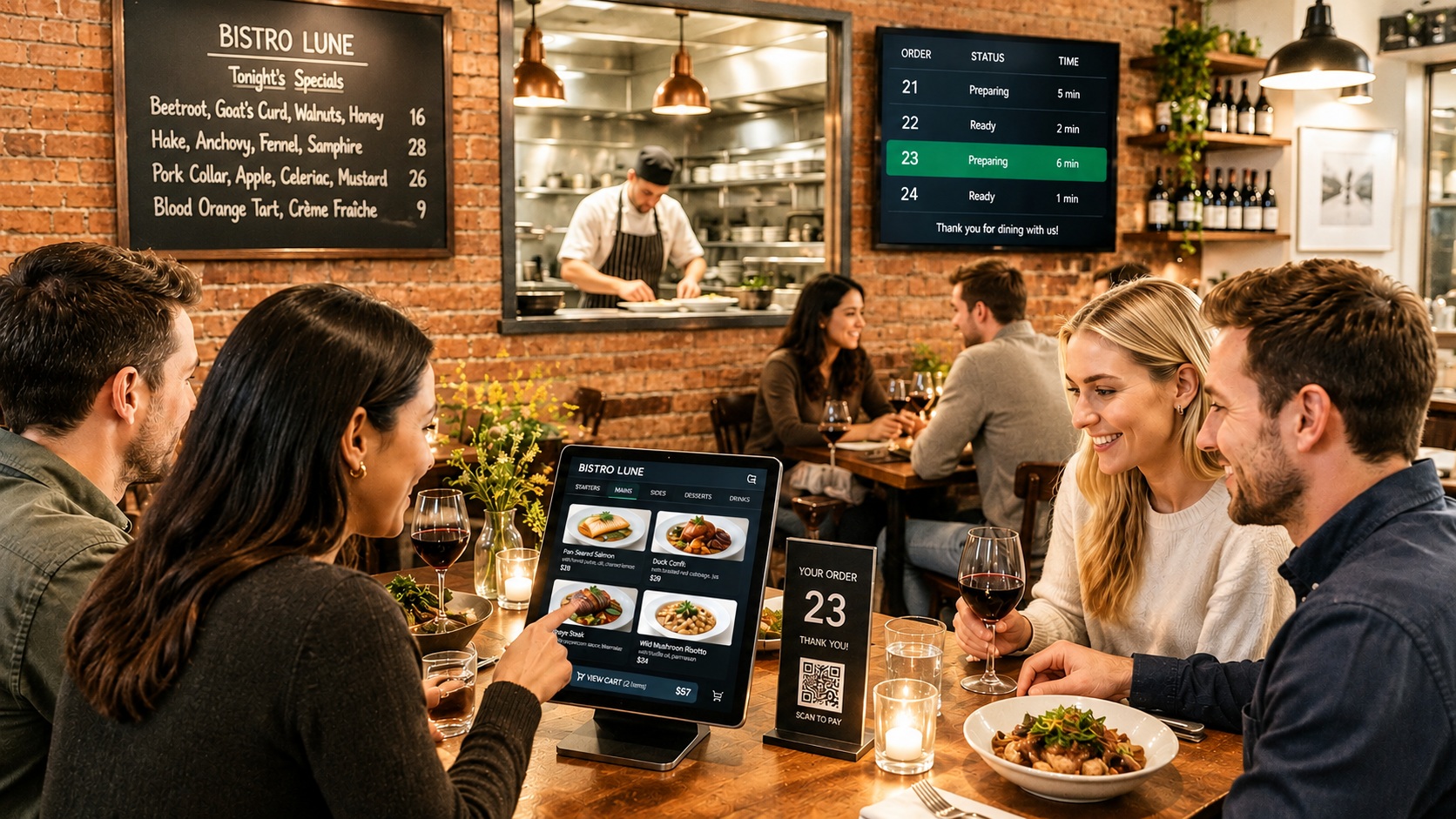

The Business
This independent restaurant had been a genuine neighbourhood favourite for years. The food was exceptional — locally sourced, carefully prepared, and consistently good. The team was passionate and the atmosphere was exactly what locals wanted from a neighbourhood restaurant.

Where They Were Stuck
The core problem was threefold:
1. The negative review narrative was dominating first impressions.
When anyone searched the restaurant by name, the first thing they encountered was a 3.2-star rating and a series of critical reviews. In the restaurant industry, where trust is everything and alternatives are plentiful, this was costing them customers before they had even looked at the menu.
2. There was no social media presence worth speaking of.
The restaurant’s social channels were inconsistent, infrequently updated, and failing to communicate anything meaningful about the experience they were actually delivering. There was no personality, no visual identity, and no reason for anyone to follow — let alone visit.
3. Happy customers weren't being asked to share their experience.
Our Approach
Phase 1 — Reputation Audit & Response Strategy
Phase 2 — Review Generation Programme
The goal was not to manufacture positive reviews — it was to ensure that the silent majority of happy customers had a frictionless way to make their voices heard.
Phase 3 — Social Media Rebuild
Phase 4 — Ongoing Monitoring & Optimisation
The Outcome
- Review rating recovered from 3.2 to 4.6 — a recovery that moved them from below average to genuinely well-regarded in their local market
- Over 80 new verified reviews — generated through the structured review programme — shifting the narrative decisively in their favour
- Social media following grew by 340% — from a negligible presence to an engaged, growing community of local food lovers
- Direct reservation enquiries through Instagram increased by 60% — social media had become a genuine, measurable source of bookings
- Fully booked Friday and Saturday evenings within 3 months — the operational recovery and the reputation recovery had finally aligned
Perhaps most significantly, the management team reported a noticeable shift in the profile of their new customers. People were arriving having specifically sought them out based on recent reviews and social content — customers who had made an active, informed choice to visit, not just wandered in. That is a fundamentally different and more valuable customer relationship.
FAQs
With a structured and proactive approach, meaningful improvements in review rating and overall sentiment are typically visible within 60 to 90 days. A full reputation recovery — where the positive narrative decisively outweighs the negative — generally takes between 3 and 6 months depending on the volume of existing reviews and the consistency of the review generation programme. The key is starting immediately, because every week of inaction extends the recovery timeline.
In most cases, negative reviews cannot be removed unless they violate the platform’s specific content policies — such as containing hate speech, personal information, or demonstrably false factual claims. The most effective strategy is not removal but dilution — generating a consistent volume of genuine positive reviews that shift the overall narrative and reduce the visibility and impact of older negative content.
Not only is it appropriate — it is essential. A professionally written, empathetic response to a negative review demonstrates accountability, shows prospective customers how you handle difficulties, and in many cases can turn a damaging review into a demonstration of your values. Research consistently shows that businesses that respond thoughtfully to negative reviews are trusted more than those that don’t respond at all.
Social media has become one of the most powerful discovery and decision-making channels for restaurant customers. Platforms like Instagram and Facebook allow independent restaurants to showcase their food, personality, and atmosphere in ways that build genuine emotional connection before a customer ever walks through the door. For independent restaurants competing against chains with larger marketing budgets, a strong and consistent social media presence is one of the most cost-effective competitive advantages available.
The most effective approach is a simple, frictionless, well-timed ask. Customers who have had a great experience are generally willing to share it — they simply need to be invited and given an easy way to do so. This can include a brief verbal mention from staff at the end of a meal, a follow-up message for online bookings, or a QR code on the table linking directly to the review platform. The critical factor is consistency — making review generation a systematic part of the customer journey rather than an occasional afterthought.
The most direct measures are review rating improvement, review volume growth, and booking enquiry volume. Beyond these, we track social media engagement and follower growth, direct reservation enquiries attributable to social channels, and where possible, revenue data to establish a clear correlation between reputation improvements and business performance. In this case, a 60% increase in direct reservation enquiries provided clear and compelling evidence of commercial impact.