


Technology is changing the way businesses operate, compete, and grow. Companies that once relied on manual processes and disconnected systems are now investing in smarter ways to manage daily operations. Digital transformation helps organizations improve efficiency, reduce delays, and create better experiences for both customers and employees.
Modern businesses generate large amounts of data and handle countless tasks every day. Managing these activities through traditional methods often leads to inefficiencies, higher costs, and slower decision-making. Digital transformation addresses these challenges through automation, connected platforms, and real-time insights that help teams work more effectively.
The shift toward digital operations is accelerating across industries. Recent market forecasts suggest global spending on digital transformation could exceed $4 trillion by 2027, reflecting the growing demand for technology-driven modernization. Organizations that embrace this change often see stronger productivity, improved operational performance, and greater flexibility in an increasingly competitive business environment.
Why Digital Transformation Matters for Modern Businesses
Business environments are becoming more complex, with rising customer expectations, growing competition, and increasing pressure to operate efficiently. Digital transformation helps organizations address these challenges through modern technologies that simplify operations, improve visibility, and support sustainable growth.
- Improves Operational Efficiency
Automated workflows reduce repetitive manual tasks and minimize errors. Teams can focus more on strategic work instead of spending time on routine administrative activities. - Enhances Decision-Making
Access to real-time data allows leaders to make faster and more informed decisions. Better visibility into operations helps identify opportunities and address issues before they escalate. - Reduces Operating Costs
Modern digital tools optimize resource utilization and eliminate process inefficiencies. Many organizations achieve significant cost savings through automation and system integration. - Strengthens Customer Experience
Faster response times, personalized interactions, and seamless digital services help businesses meet evolving customer expectations and build stronger relationships. - Increases Business Agility
Digital systems make it easier to adapt to market changes, customer demands, and new opportunities. Organizations can implement changes more quickly without disrupting operations.
Digital transformation is no longer exclusive to large enterprises. Businesses of all sizes are adopting digital tools to improve efficiency, stay competitive, and strengthen operations. Organizations that invest in modernization today are often better prepared to adapt to future changes and support long-term growth.
Key Technologies Driving Digital Transformation
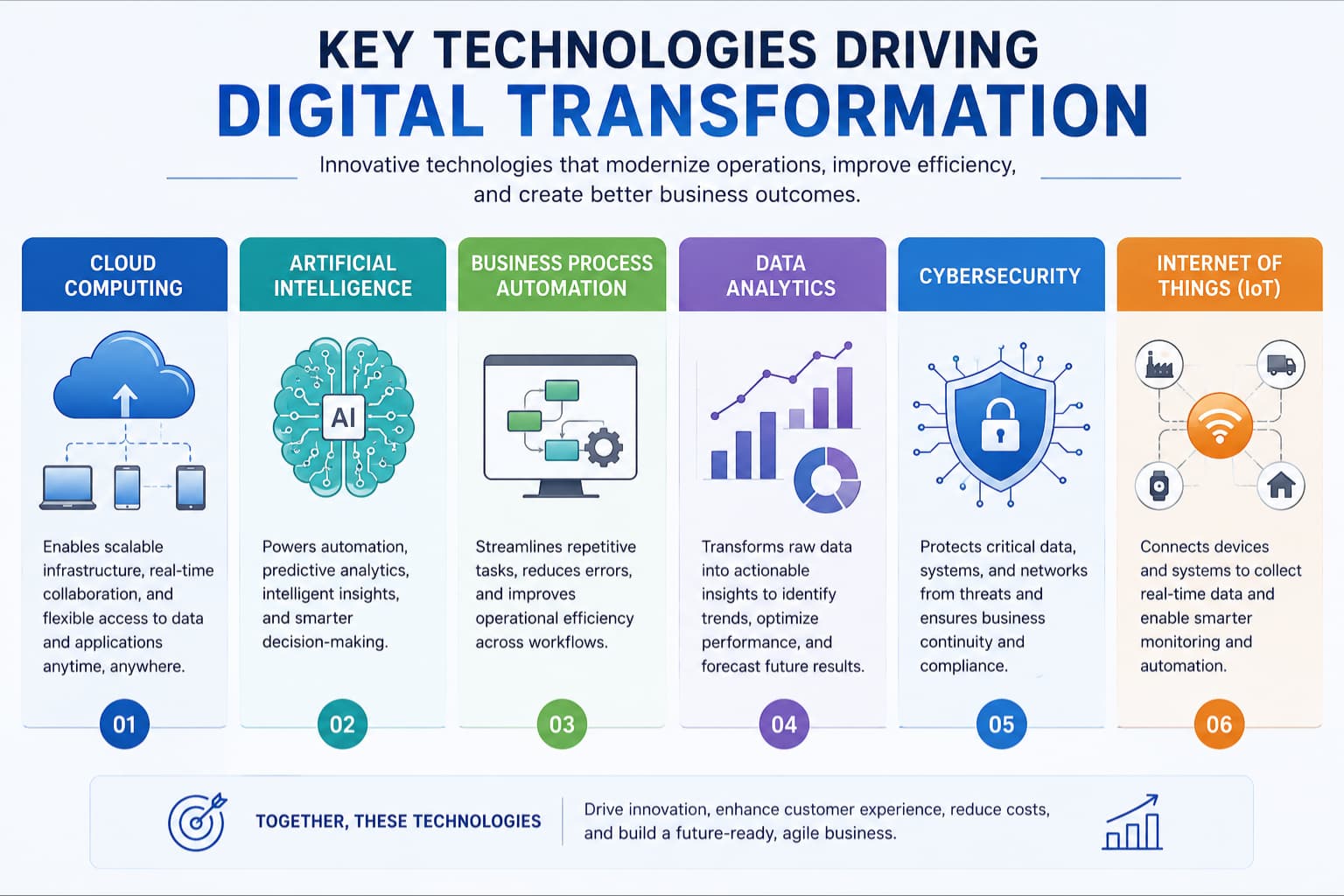
Successful digital transformation depends on technologies that improve efficiency, increase visibility, and simplify business operations. Rather than investing in technology for its own sake, organizations are focusing on solutions that solve operational challenges and support measurable business outcomes.
The growing adoption of cloud platforms, automation tools, artificial intelligence, and advanced analytics has changed how businesses manage workflows and make decisions. These technologies help create connected operations, allowing teams to access information faster and work more effectively across departments.
- Cloud Computing – Provides flexible access to applications, data, and business systems while reducing reliance on on-premise infrastructure.
- Artificial Intelligence (AI) – Helps analyze large volumes of data, identify patterns, and support faster decision-making.
- Business Process Automation – Automates repetitive tasks such as approvals, reporting, and data entry, improving speed and accuracy.
- Data Analytics and Business Intelligence – Transforms raw data into actionable insights that support strategic planning and performance monitoring.
- Cybersecurity – Protects business systems, sensitive data, and digital assets from evolving cyber threats while supporting compliance and business continuity.
- Internet of Things (IoT) – Connects devices and systems to provide real-time operational visibility and improve asset management.
When these technologies work together, organizations gain greater control over operations and improve their ability to respond to changing business demands. The result is a more efficient, agile, and scalable operating model that supports sustainable growth.
Common Challenges in Digital Transformation
Despite the benefits, digital transformation is rarely a straightforward process. Many organizations face obstacles when integrating new technologies with existing systems and workflows. Legacy infrastructure, fragmented data, and outdated processes can slow implementation efforts and increase costs.
Employee adoption is another significant challenge. New tools and automated workflows often require teams to adjust how they work and collaborate. Without proper training, communication, and leadership support, resistance to change can limit the effectiveness of transformation initiatives.
Industry studies consistently identify employee resistance, legacy systems, and unclear transformation goals among the most common barriers to digital transformation success. Organizations that address these challenges early are more likely to achieve smoother implementation and stronger business outcomes.
Best Practices for a Successful Digital Transformation Strategy
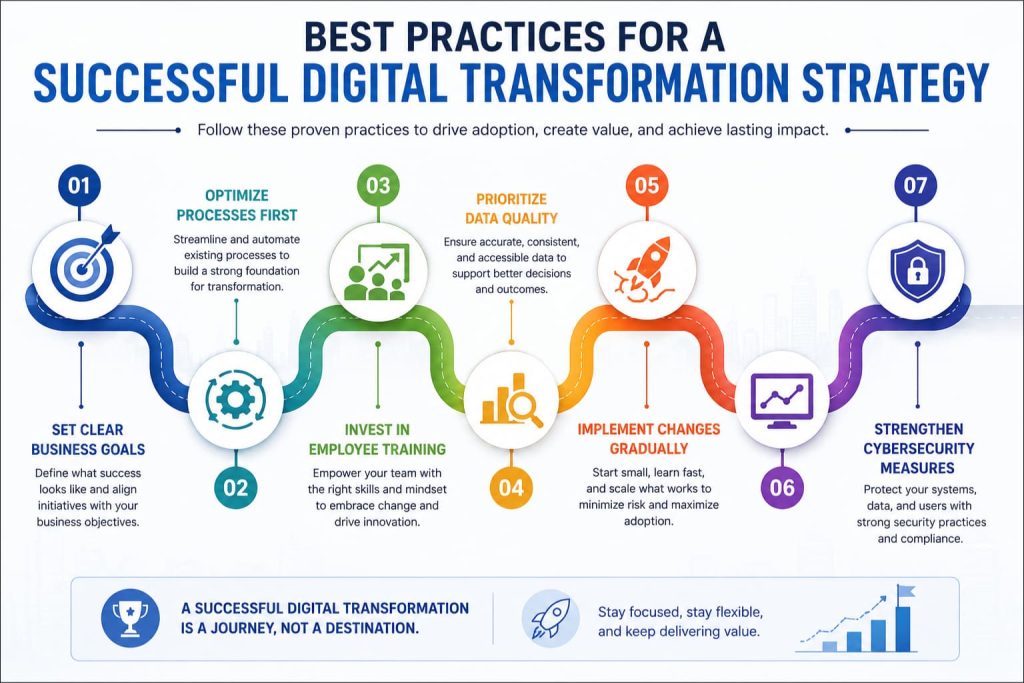
- Define Clear Business Objectives
Start with specific goals that align with broader business priorities. A clear roadmap helps organizations focus investments on initiatives that deliver measurable value. - Focus on Process Improvement First
Technology works best when supported by efficient processes. Reviewing and optimizing workflows before implementation can prevent existing inefficiencies from carrying over into new systems. - Invest in Employee Training
Employees play a critical role in transformation success. Ongoing training and support help teams adopt new tools confidently and maximize their value. - Prioritize Data Quality and Governance
Reliable data is essential for automation, analytics, and decision-making. Strong governance practices help maintain accuracy, consistency, and security across systems. - Adopt a Phased Implementation Approach
Large-scale transformations are often more effective when rolled out in stages. Incremental improvements reduce risk and allow organizations to make adjustments along the way. - Track Performance Regularly
Tracking key performance indicators helps evaluate progress and identify areas for improvement. Regular assessments ensure transformation efforts remain aligned with business goals. - Strengthen Cybersecurity Measures
Protect business systems, sensitive data, and digital assets as digital adoption expands. Strong cybersecurity practices help reduce risks, maintain compliance, and support business continuity.
Measuring the Impact of Digital Transformation
Digital transformation initiatives require continuous evaluation to ensure they deliver the expected business value. Organizations that monitor performance regularly can identify strengths, address gaps, and make informed decisions about future technology investments. Measuring results also helps justify transformation efforts and demonstrate their impact across the business.
A structured approach to performance tracking provides greater visibility into operational improvements and business outcomes. Rather than relying on assumptions, organizations can use measurable indicators to understand how technology and automation are influencing productivity, efficiency, and overall growth.
- Improved operational efficiency
- Reduced business costs
- Higher customer satisfaction
- Increased employee productivity
- Faster decision-making processes
- Greater revenue growth
- Stronger data visibility
- Better process accuracy
Regularly reviewing these metrics provides a clearer picture of transformation success. Organizations that track outcomes consistently can refine their strategies, maximize technology investments, and ensure digital initiatives continue to support long-term business growth.
Digital Transformation Trends Shaping the Future
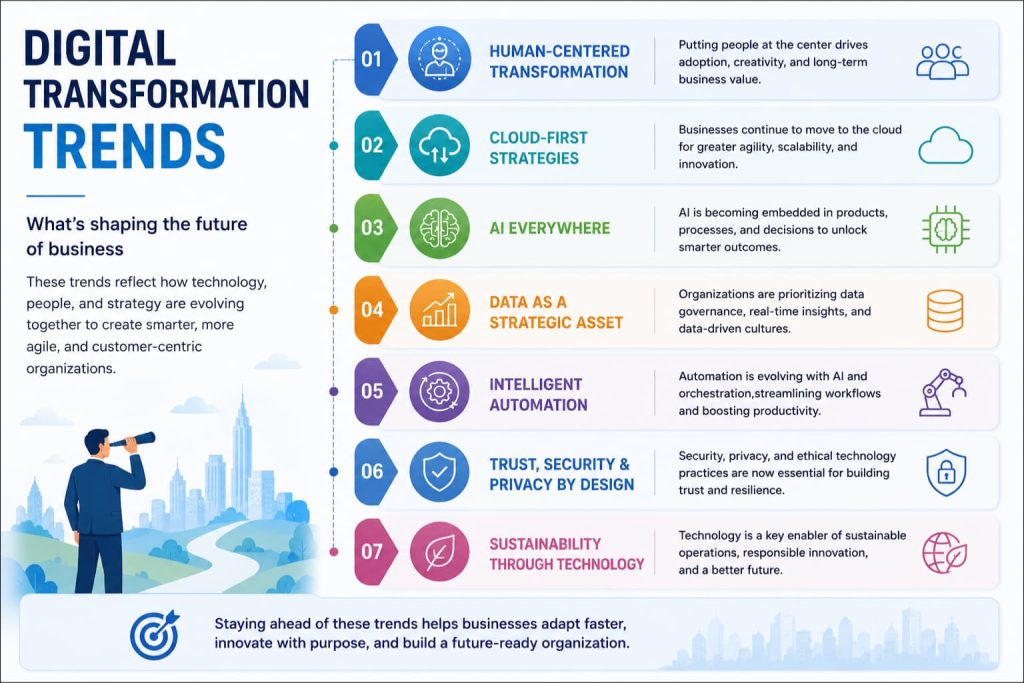
The next phase of digital transformation will be driven by technologies that help businesses operate with greater speed, intelligence, and flexibility. Organizations are increasingly moving beyond basic automation and investing in solutions that support predictive insights, real-time decision-making, and seamless collaboration across teams.
Artificial intelligence is expected to play a larger role in everyday business operations, from customer service and process automation to data analysis and forecasting. At the same time, cloud-native platforms and integrated digital ecosystems are making it easier for organizations to scale operations and adapt to changing market conditions.
As digital capabilities continue to mature, businesses will place greater emphasis on creating connected experiences for employees, customers, and partners. Organizations that remain open to innovation and continuously modernize their operations will be better positioned to improve performance, strengthen competitiveness, and support long-term growth.
Building a Future-Ready Business
Digital transformation has become a key driver of business growth, operational efficiency, and long-term resilience. Organizations that embrace technology and automation are better equipped to streamline processes, improve decision-making, and respond to changing customer expectations. As digital capabilities continue to evolve, modernization will remain an essential part of maintaining a competitive edge.
Success in digital transformation goes beyond adopting new tools. It requires a clear strategy, strong leadership, continuous improvement, and a willingness to adapt. Businesses that combine technology investments with process optimization and employee engagement can create a more agile operating model that supports sustainable growth in an increasingly digital world.