
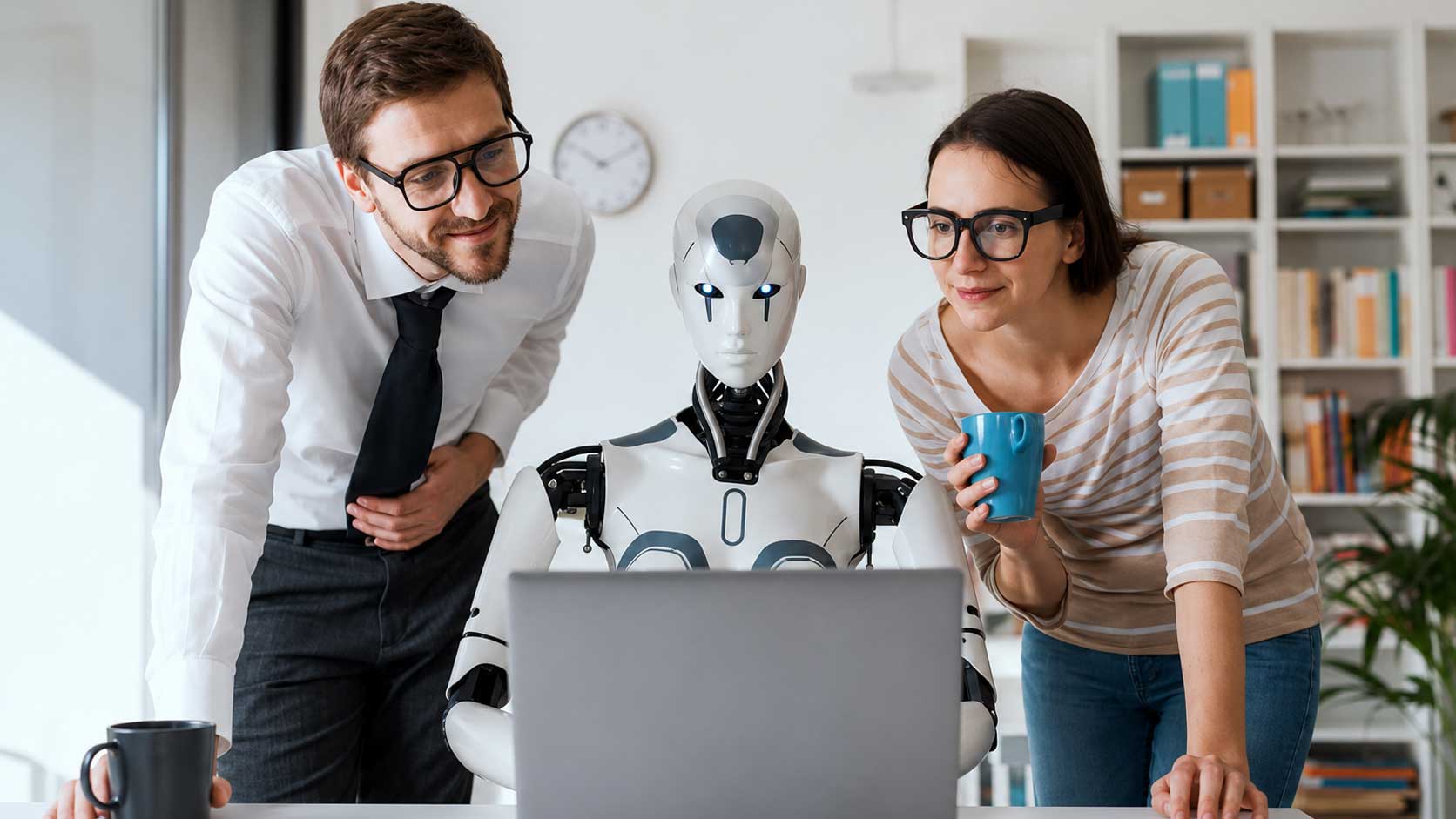

As a human–AI collaboration consultant, we helped an energy and utilities enterprise cut time-to-answer for field engineers by 39% and preserve decades of retiring institutional knowledge in a 14-week engagement — by building an AI copilot designed to amplify expertise, not compete with it.
The Workforce Didn't Need Replacing. It Needed Reinforcement.
This energy company faced a challenge familiar to infrastructure organisations everywhere. Its most experienced engineers were nearing retirement, carrying decades of operational knowledge that lived in people, not manuals — how to diagnose equipment failure by sound, spot recurring network issues from memory, and respond to incidents under pressure.
Younger engineers, meanwhile, relied on disconnected documentation scattered across maintenance systems, safety manuals and technical reports. The organisation wasn’t losing technology. It was losing institutional knowledge.
Knowledge Was Everywhere. Guidance Wasn't.
Field teams worked across generation facilities, substations and remote infrastructure. Finding the right information often meant searching multiple systems, calling an experienced colleague, or waiting for a specialist to become available.
Routine maintenance ran slower than it needed to. Incident response leaned heavily on individual experience. Despite storing enormous amounts of operational information digitally, employees struggled to retrieve the right knowledge at the right moment. The business didn’t need another repository — it needed an intelligent colleague.
Designing Human–AI Collaboration
XONIK approached the engagement with a simple philosophy: AI should amplify human expertise, not compete with it. The transformation began by identifying the highest-value moments where AI could support employees without removing human judgement.
- An enterprise AI copilot integrated engineering manuals, operational procedures, maintenance histories, equipment specifications and safety protocols into one conversational experience, with engineers asking natural-language questions and getting context-aware recommendations back.
- Field technicians gained mobile access to the copilot while on site — whether troubleshooting equipment, reviewing procedures or checking safety requirements — with engineers always making the final call.
- XONIK introduced structured knowledge-capture processes that turned expert insight into reusable enterprise intelligence, while governance kept AI recommendations transparent, traceable and subject to human validation.

Our Methodology
This engagement followed our five-phase Human–AI Collaboration framework — Expertise & Knowledge Audit, Copilot Design & Governance, Mobile Field Deployment, Knowledge-Capture Rollout, and Adoption & Validation — applied across engineering, field operations and technical training over 14 weeks.
Five named deliverables anchored the engagement:
- Institutional Knowledge Audit — identifying where critical expertise was concentrated in individuals rather than documented systems, ahead of retirements.
- Enterprise AI Copilot — a single conversational interface bringing manuals, procedures, maintenance histories, specs and safety protocols together.
- Mobile Field Access Layer — on-site access so troubleshooting, procedure checks and safety guidance arrive in seconds, not after a callback.
- Structured Knowledge-Capture Programme — turning expert insight into reusable enterprise intelligence rather than tacit, undocumented knowledge.
- Governance & Human Validation Model — keeping every recommendation transparent, traceable and subject to engineer sign-off.
Each deliverable fed directly into the copilot’s knowledge base, so every answer traced back to a documented, human-validated source rather than an unverifiable model guess.
What Changed in the First 12 Months
- Time-to-answer for field engineers fell by approximately 39% across routine troubleshooting and procedure checks.
- An enterprise AI copilot is now deployed across engineering and operations teams.
- Knowledge transfer between experienced and emerging workforce improved measurably.
- Less time was spent searching for documentation during field operations.
- Workforce learning strengthened through AI-assisted guidance for new hires.
- Collaboration improved without compromising human decision-making or safety.

Our Perspective
The future of work isn’t humans versus AI. It’s humans with AI.
Organisations that succeed won’t be the ones automating the most jobs — they’ll be the ones empowering people with intelligent tools that sharpen judgement, accelerate learning and preserve institutional knowledge.
The performance case for this is now well documented: McKinsey’s State of Organizations 2026 research frames this as a shift from AI as a tool to AI as a collaborative teammate, with organisations investing roughly five dollars in people for every dollar spent on AI technology — the same principle behind why the copilot was designed to amplify engineers rather than replace them.
Frequently Asked Questions
What is Human–AI Collaboration?
It enables employees and AI to work together, combining human expertise with AI-driven insight to improve productivity and decision-making.
How do AI copilots support employees?
They provide contextual guidance, answer questions, surface enterprise knowledge and automate repetitive tasks while keeping humans in control of final decisions.
Why is Human–AI Collaboration important?
It improves workforce productivity, accelerates learning, preserves organisational knowledge and builds employee confidence without replacing human expertise.
Which industries benefit from Human–AI Collaboration?
Energy, manufacturing, healthcare, logistics, retail, telecommunications and other knowledge-intensive industries.
What was the measurable outcome of this Human–AI Collaboration engagement?
Time-to-answer for field engineers fell by approximately 39%, and institutional knowledge was captured as reusable enterprise intelligence ahead of a wave of retirements.
Work With a Human–AI Collaboration Consultant
Technology alone doesn’t transform organisations. People do. XONIK helps enterprises design Human–AI Collaboration strategies that improve productivity, preserve expertise and help employees work more confidently alongside intelligent systems.