


As an AI workforce transformation consultant, we helped a higher education institution lift workforce AI confidence by 44% and build role-specific AI capability across faculty, research and administration in an 18-week programme — proving that AI transformation begins with people, not software.
The Real AI Challenge Wasn't Technology. It Was People.
The university had already invested significantly in digital transformation. Learning platforms had evolved, administrative systems had modernised, and students expected personalised, technology-enabled experiences.
Then generative AI arrived. Faculty questioned its effect on teaching. Administrative staff worried about automation. Academic leaders debated policy while students rapidly adopted new AI tools in everyday learning. Technology adoption was accelerating. Workforce confidence wasn’t.
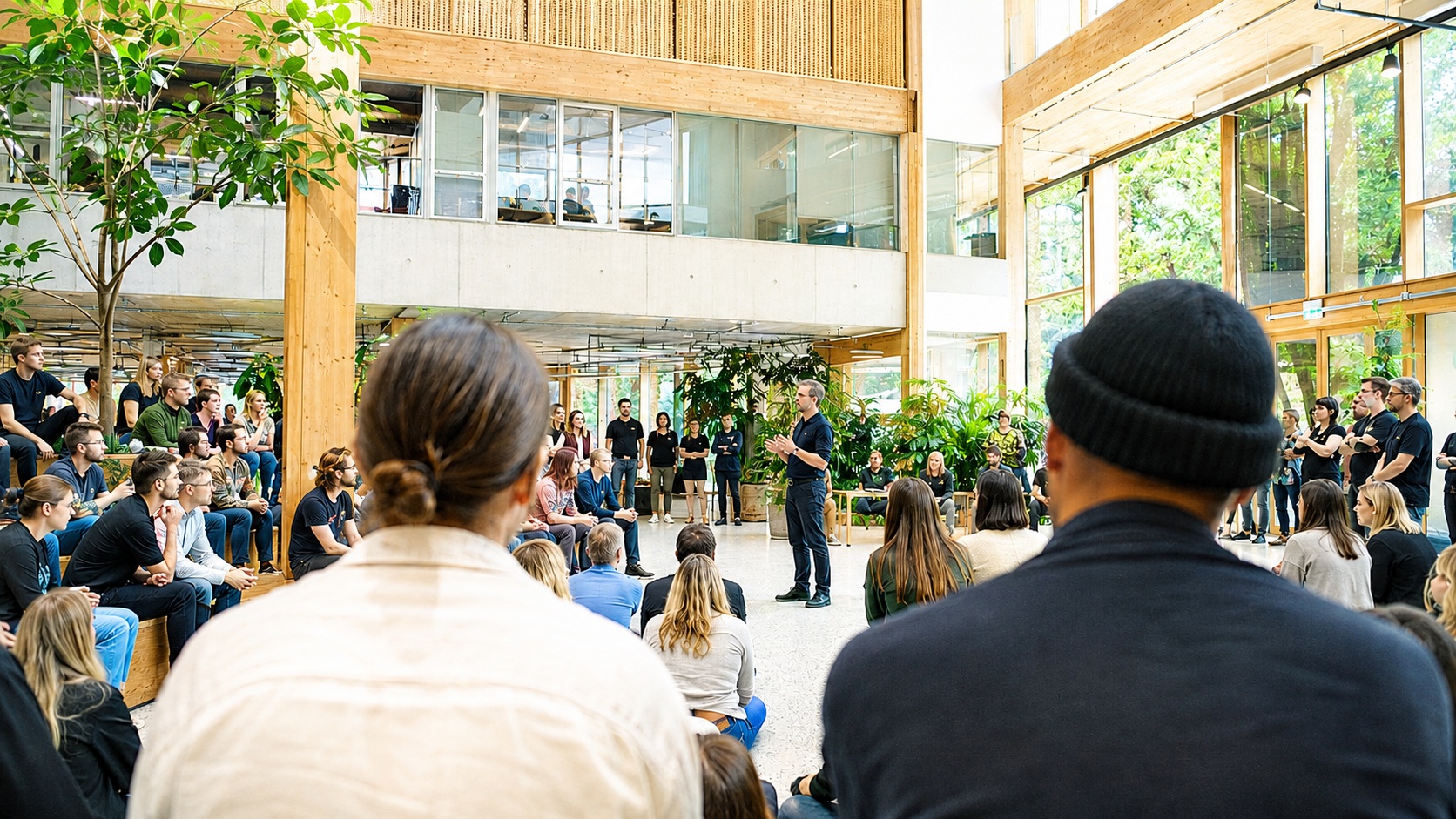
Preparing People for an AI Future
Unlike many industries, education depends almost entirely on human expertise. Faculty inspire critical thinking. Researchers create knowledge. Advisors guide students. Administrators coordinate thousands of daily academic operations.
Some departments embraced AI enthusiastically; others avoided it completely. Policies differed by faculty. Training was optional. Knowledge sharing happened informally. The goal was never to teach everyone how AI works — it was to help everyone understand how to work effectively with AI.
Designing the Workforce Transformation Program
XONIK designed a strategy focused on capability, not technology. The engagement opened with an AI skills and readiness assessment across academic, operational and leadership functions — measuring confidence, adoption behaviour, role-specific opportunity and learning priority, not just technical expertise.
- From those insights, workforce personas were built for educators, researchers, student services, administrators and executive leadership, because each group needed fundamentally different AI capability for fundamentally different work.
- Faculty took part in workshops on responsible AI in teaching, assessment design and academic integrity, while researchers learned how AI could accelerate literature review, discovery and data analysis while protecting scholarly standards.
- Rather than one-off training, XONIK built a continuous learning ecosystem — AI academies, peer learning communities, digital knowledge hubs and internal AI champions supporting adoption across departments — alongside usage guidelines and governance policy for responsible institution-wide adoption.

Our Methodology
This engagement followed our five-phase AI Workforce Transformation framework — Skills & Readiness Assessment, Persona-Based Learning Design, Role-Specific Enablement, Continuous Learning Ecosystem Build, and Governance & Champion Rollout — applied across academic, research, administrative and executive roles over 18 weeks.
Five named deliverables anchored the engagement:
- AI Skills & Readiness Assessment — measuring confidence, adoption behaviour, role-specific opportunity and learning priority across academic, operational and leadership functions.
- Workforce Persona Framework — distinct capability pathways for educators, researchers, student services, administrators and executive leadership.
- Role-Specific Enablement Curriculum — responsible AI in teaching and assessment, accelerated research methods, streamlined administrative workflows and executive strategy sessions.
- Continuous Learning Ecosystem — AI academies, peer learning communities and digital knowledge hubs replacing one-off training events.
- Internal AI Champion Network — advocates supporting adoption across departments alongside usage guidelines and governance policy.
Each deliverable fed directly into how departments adopted AI going forward, so capability building became continuous rather than a single training push.
What Changed in the First 12 Months
- Workforce AI confidence increased by approximately 44% across academic, research and administrative roles.
- An enterprise AI capability framework is now established across academic and administrative functions.
- Role-specific AI learning pathways now exist for educators, researchers and operational teams.
- Internal AI champions support continuous organisational learning across every department.
- Responsible AI policies are embedded into teaching, research and administration.
- A sustainable culture of AI innovation is now established across the institution.

Our Perspective
AI transformation doesn’t begin with software. It begins with people.
Organisations that invest in workforce capability build stronger, more resilient cultures where innovation becomes part of everyday work — not a separate initiative.
The performance case for this is now well documented: Kyndryl’s 2026 People Readiness Report found that organisations which redesign roles, implement structured change management and invest in workforce readiness are 1.5 times more likely to achieve AI-related revenue growth and 1.6 times more likely to report improved innovation — exactly the combination of role redesign, change management and readiness this programme was built around.
Frequently Asked Questions
What is AI Workforce Transformation?
It prepares employees with the skills, confidence and governance needed to work effectively alongside artificial intelligence.
Why is workforce transformation important for AI?
Technology alone cannot deliver business value — employees need the knowledge, skills and confidence to adopt AI responsibly and productively.
How do organisations prepare employees for AI?
Through role-specific learning, leadership alignment, practical training, governance frameworks and continuous capability development.
Which industries benefit from AI Workforce Transformation?
Education, healthcare, manufacturing, retail, logistics, professional services and virtually every knowledge-driven industry.
What was the measurable outcome of this workforce transformation programme?
Workforce AI confidence increased by approximately 44% across academic, research and administrative roles within the 18-week programme.
Work With an AI Workforce Transformation Consultant
The success of AI depends on the people who use it. XONIK helps organisations build AI-ready workforces through strategic capability development, leadership alignment and human-centred transformation programs.