Enterprise AI Readiness Checklist
A checklist for the people deciding whether to fund AI beyond a pilot. Each area opens with how it usually fails and closes with a first move.
Free to download. No email address is asked for.
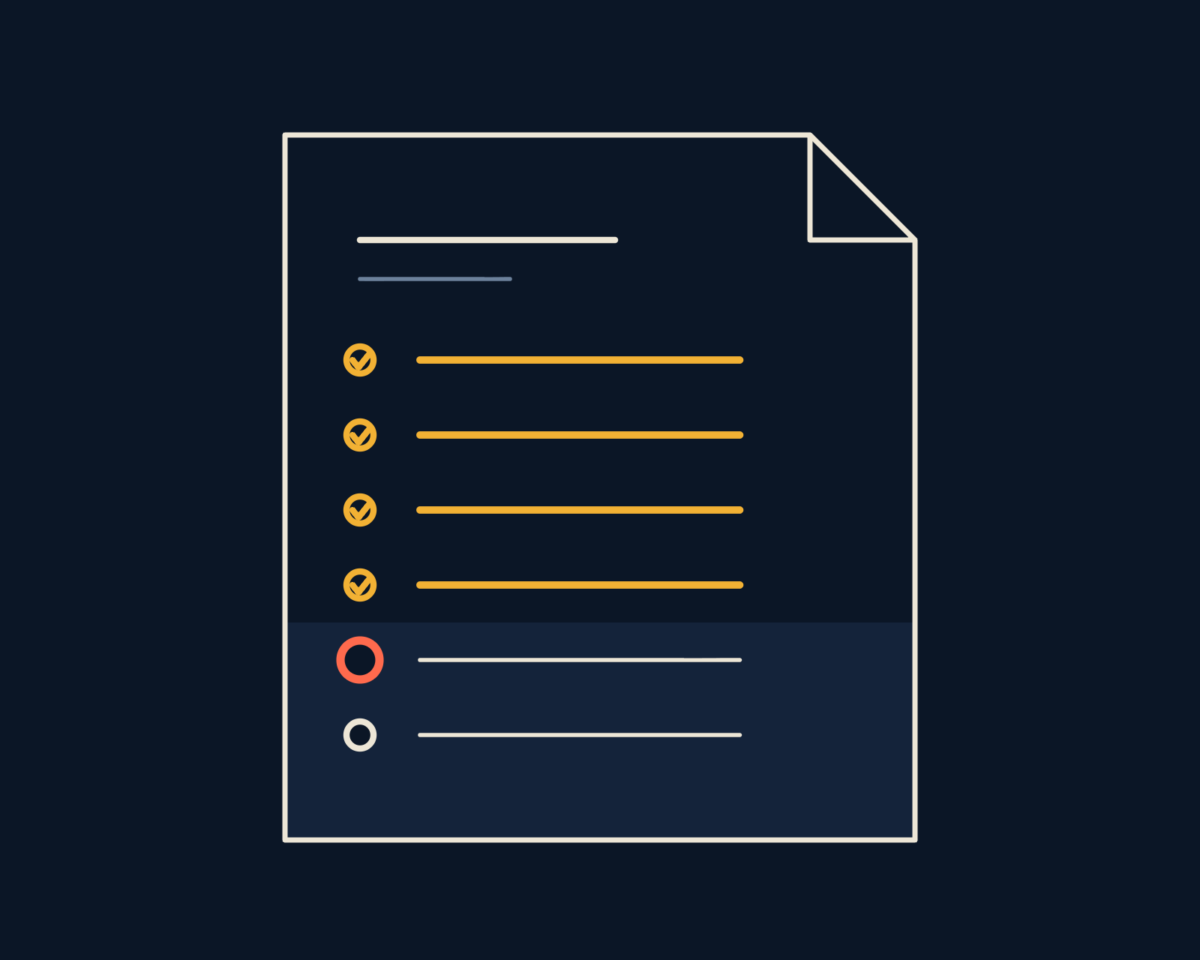
What the checklist asks, area by area
- Data: whether the first use case's data can be reached without a project of its own, and which system wins when systems disagree
- Ownership: a named owner with authority to change or stop each system, and who decides when a pilot goes live
- Process: maps of the work as it runs, the point where a person overrides, and the day the old manual route ends
- Sponsorship: written conditions for funding past the pilot, including running costs
- Operations: who watches each live system, a tested fallback, and a switch-off that has been practiced
- Governance: written rules on what AI may be used for, a list of systems that includes bought features, and a rehearsed error route
- A closing page for the proof behind each area and who holds it
How a review with it goes
- 01
Seat the owner of each area in the same room
Data or technology, the function that would use AI, and whoever answers for risk. Each ticks only what they could show a colleague today. A statement true in one team and false in another stays unticked.
- 02
Read the thinnest area, not the total
Adding the ticks into one score hides the finding. The area with the fewest ticks is where funded work stalls first, and its first move is printed under it.
- 03
Fill the evidence page before the meeting ends
Write where each proof lives. If nobody can say, the statement is not yet true.
Limits
A checklist records your reading of your own organization, and a different person may tick differently. It tests no system. It is not an audit, a certification or a benchmark, and it is not legal or financial advice.
On this page
What has to be true before the budget conversation?
Funding AI beyond a pilot commits the organization to run a system, change it and answer for it, which a demonstration never asked. Reach for the checklist before that budget conversation, while the sponsor, the head of data or technology and the risk lead are still deciding what has to be true first. It also suits a stalled pilot, where empty boxes tend to show why.
A pattern, worked through
Ticking the ownership box for a customer assistant
A retail group has piloted an assistant that drafts replies to customer queries. The sponsor, wanting production funding, ticks the statement that every AI system has a named owner, because the head of customer service is in the project charter.
- The next statement asks for more. It wants to know whether the owner has agreed and has the authority to change the system or stop it.
- The owner is asked. The head of customer service learns the name on the charter meant answering for wrong replies and holding the switch. Nobody had said so.
- The box is unticked and the evidence page changes. It now needs the owner's agreement and the criteria for moving to daily use, so both are written that week.
Where it endsFunding waits for an owner who has agreed and for criteria written before any result is in. No other area makes up for this one.
What happens once an area is thin?
The Enterprise AI Readiness Assessment on this site scores the same areas and can be repeated once the work is done. For a single pilot close to go-live, the AI-to-Production Readiness Playbook goes further. When the gaps need decisions across functions, our AI consulting work begins there.
What do people ask before using the readiness checklist?
Who should fill in the AI readiness checklist, and when?
Fill it in before the budget conversation, with the sponsor, the head of data or technology and whoever answers for risk in the room. Each person ticks only what they could show a colleague today. It also suits a stalled pilot, where the empty boxes tend to explain the stall.
Should I add up the ticks into a readiness score?
No. Adding the ticks into a single score hides the finding. Readiness is uneven, so read the area with the fewest ticks, because that is where funded work stalls first. Each area prints a first move beneath it, which tells you where to begin.
Is the readiness checklist an audit of our AI systems?
No. It records your own reading of your own organization, and a different person may tick differently. It tests no system and is not an audit, a certification or a benchmark. Treat it as a guide for a conversation among the people who own each area.
What do we do once an area comes out thin?
Start with the first move printed under that area and record the proof on the evidence page. The Enterprise AI Readiness Assessment on this site scores the same areas and can be repeated afterward. If the gaps need decisions across functions, talking to an adviser is the better route.
Want a second view of your readiness?
Describe what you are weighing in a few lines. A senior practitioner replies with a suggested first conversation.